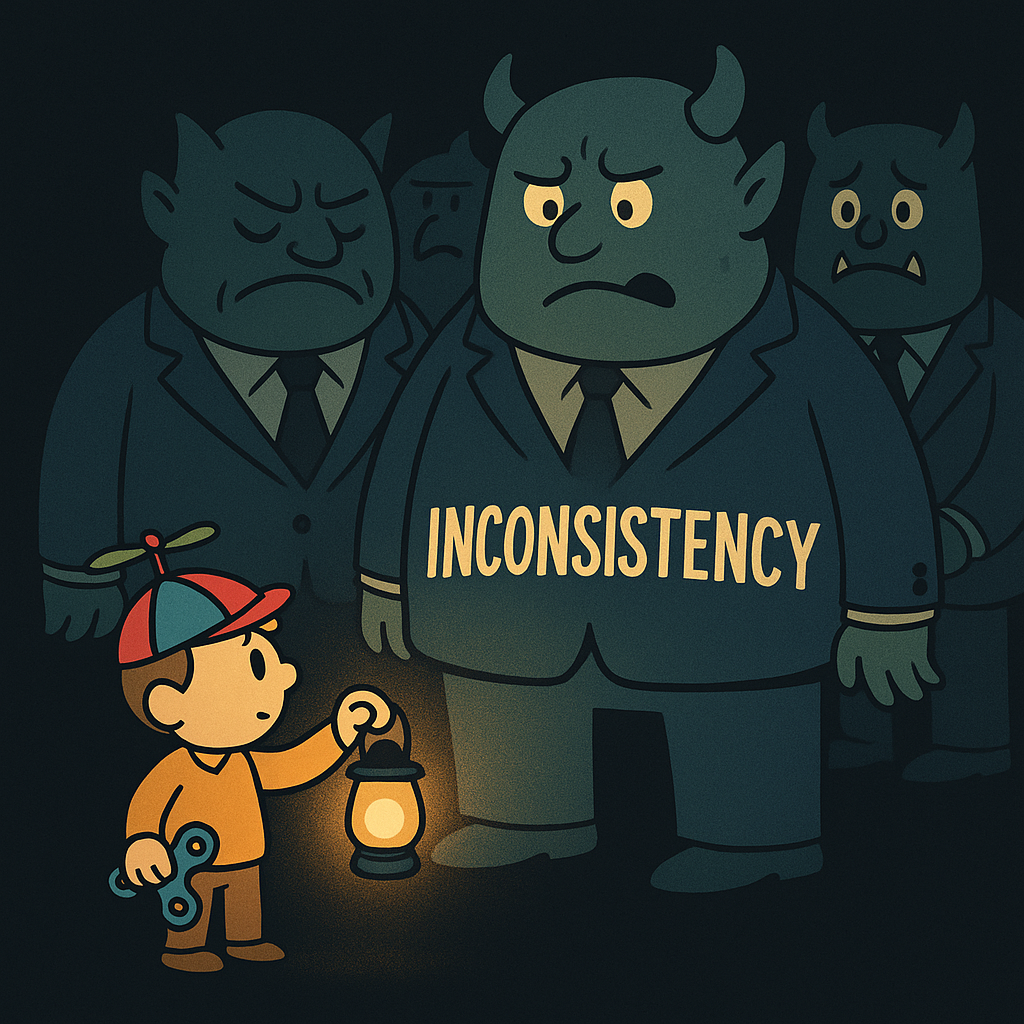
Autistic adults are not usually punished for being wrong. More often, we are punished for being right at the exact moment that accuracy becomes inconvenient for someone in power.
If you strip away the polite language, a lot of disputes between autistic people and organisations follow the same pattern. An autistic person notices a contradiction, quotes a policy accurately, or documents an event in detail. The organisation feels exposed, then the focus quietly shifts from the facts to the autistic person’s “tone”, “attitude” or “behaviour”.
This article looks at that pattern directly. Not as a social mystery, but as a structural problem in how UK services, employers and charities deal with disabled people who are factually correct.
It does not start with behaviour. It starts with accuracy.
At a basic level, autistic cognition leans heavily on detail, consistency and internal logic. Many autistic people will recognise the instinct to keep mental timelines, remember exact wording, and notice when the story changes halfway through. Research has described autistic people as placing a particularly high value on truthfulness and internal consistency, even when this causes social friction.1
At the same time, there is clear evidence that autistic adults are often misjudged as less credible or even deceptive, simply because our body language, eye contact or communication style does not match non autistic expectations.2 The National Autistic Society has written about autistic people being seen as “rude”, “disrespectful” or “difficult” when they are being literal and honest, especially at work.3
Put those two things together and you get a predictable collision. Autistic people often provide high quality information. Institutions often experience that information as a threat.
The pattern: how being right becomes a problem
Once you have seen this pattern, you cannot unsee it. It looks something like this:
- The autistic person notices an inconsistency or breach and names it clearly.
- The facts are awkward for someone with status, influence or reputational risk.
- The conversation shifts from content to “tone”, “manner” or “professionalism”.
- The autistic person is reframed as hostile, obsessive, threatening or incapable of “constructive engagement”.
- Safeguarding, “behavioural concern” or complaint handling language is used to contain the person, rather than address the issue.
- The underlying problem often remains unsolved, but the autistic person acquires a label.
We have documented versions of this pattern in several of our articles, including the casefile on The Recruitment Junction and the polite humbling of the National Pharmacy Association. In each example, detailed and accurate information about process failures led to escalation against the person raising the concern, instead of triggering a serious attempt to fix those failures.
Where this shows up in real life
Contradictions
Autistic people are often the ones who say the quiet part out loud: “Your policy says X, your email yesterday said Y, and what you are doing now is Z.”
That should be useful. It is the kind of clarity organisations pay consultants for. Yet when the contradiction reveals something embarrassing, the reaction often looks like:
- You are “reading too much into it”.
- You are “over analysing”.
- You are “fixating on details”.
In other words, the facts are not welcome. Your way of seeing the world becomes the issue, rather than the gap between what was promised and what actually happened.
Policy breaches
The Equality Act 2010 places a clear legal duty on service providers and employers to make reasonable adjustments for disabled people.45 Organisations like ACAS and the National Autistic Society have published very practical guidance on what that can look like in workplaces, including adjustments around communication, predictability and sensory impact.67
Autistic people who read policies carefully and understand their rights are often the first to spot when those duties are not being met. In a healthy governance culture, pointing out a breach would trigger a review. In reality, it often triggers defensiveness.
In our write up of the Charity Commission’s response regarding The Recruitment Junction, we show what happens when an organisation’s internal story about itself collides with a disabled person’s documented account of what actually occurred. The question quietly shifts from “did we breach policy” to “how do we manage this individual”.
Bad behaviour and “professional boundaries”
When staff act inappropriately or breach their own standards, autistic people are more likely than most to describe what happened in plain language. No euphemisms, no smoothing over, no polite edit for the sake of the relationship.
That makes it much harder for organisations to minimise harm. It also makes it easier for them to paint the autistic person as aggressive or malicious, particularly when complaint handlers focus on emotional impact on staff rather than the substance of the allegation.
Complaint guidance for public bodies in England often talks about “managing challenging complainant behaviour” and about staff feeling “safe” when dealing with complaints.89 This is not wrong in itself, but when autistic accuracy is coded as a “threat”, those frameworks can be turned against the very people they were meant to protect.
Procedural shortcuts and quiet retaliation
Modern bureaucracy runs on shortcuts. Missing acknowledgements, informal workarounds, unrecorded decisions, undocumented phone calls. Autistic people often struggle with this precisely because we expect systems to behave like systems, not like improvisational theatre.
When you insist that procedures are followed, or you document every step, you expose those shortcuts. That can trigger subtle forms of retaliation:
- emails being ignored or selectively answered
- service access being quietly reduced
- staff refusing to correspond in writing
- being told to route everything through a single gatekeeper
Disability organisations like Scope warn that both public and private services must avoid treating disabled people worse because they exercise their rights or raise concerns.10 That principle is often honoured in policy, then broken in practice.
Incompetence and face saving
Nobody enjoys being confronted with their own mistakes. For some staff, the idea that a disabled service user might have a stronger grasp of the rules, the evidence or the timeline than they do can be deeply threatening to their professional self image.
Instead of saying, “You are right, we got this wrong”, organisational instinct often leans towards:
- questioning your motives
- questioning your mental state
- questioning your understanding of the process
Autistic adults are then invited to accept a story where the real problem is not the error that occurred, but their “reaction” to it. If you refuse that story, the punishment escalates.
Why institutions react as if accuracy is a threat
Organisations protect themselves through narrative. Official statements, policy documents, annual reports, carefully drafted complaint responses. All of these build a picture of a service that is lawful, fair and safe.
When an autistic person arrives with detailed evidence that does not match that picture, it can feel to staff as if something is being attacked. In reality, what is being attacked is the gap between the official narrative and the lived reality.
Instead of treating that gap as a problem to fix, many organisations treat the autistic person as the problem. That is how you end up with:
- safeguarding referrals being used against people who have done nothing unsafe
- “harassment” allegations directed at those who simply persist in asking for answers
- internal emails that frame legitimate questions as risk behaviour
In our analysis of The Recruitment Junction’s complaint response, we explored how reputational self protection can take priority over honest self examination, even inside organisations that publicly talk about second chances, compassion and inclusion.
The real cost when autistic people are punished for being correct
The cost is not only personal, although that part matters. Being recast as a “problem” or a “risk” for raising accurate concerns is corrosive to mental health, trust and willingness to seek help in future.
The wider cost is systemic. When the first people to spot failures are pushed out, silenced or discredited, organisations lose their most sensitive alarm system. Problems that could have been fixed early turn into scandals, safeguarding tragedies or legal cases years later.
Disabled people are often described in policy documents as “vulnerable”. In reality, we are frequently the ones doing unpaid quality assurance for systems that do not pay attention until something breaks in public.
If services wanted to fix this, they could
None of this is inevitable. There are practical steps that employers, charities, councils and other bodies could implement tomorrow.
- Take complaints and concerns from disabled people as potential evidence of a need for reasonable adjustments, not as a nuisance to manage.12
- Respect written communication as a valid and often essential adjustment for autistic people.
- Train staff that direct, detailed communication from an autistic person is usually a sign of engagement, not aggression.
- Separate behaviour risk assessments from reputational risk or discomfort with being challenged.
- Audit internal language. If words like “difficult”, “obsessed” or “fixated” appear around someone who is simply accurate, something has gone wrong.
Organisations will always feel some discomfort when someone points out that the story and the reality do not match. The question is whether they punish the person holding up the mirror, or finally look at what the mirror is showing them.


Be First to Comment