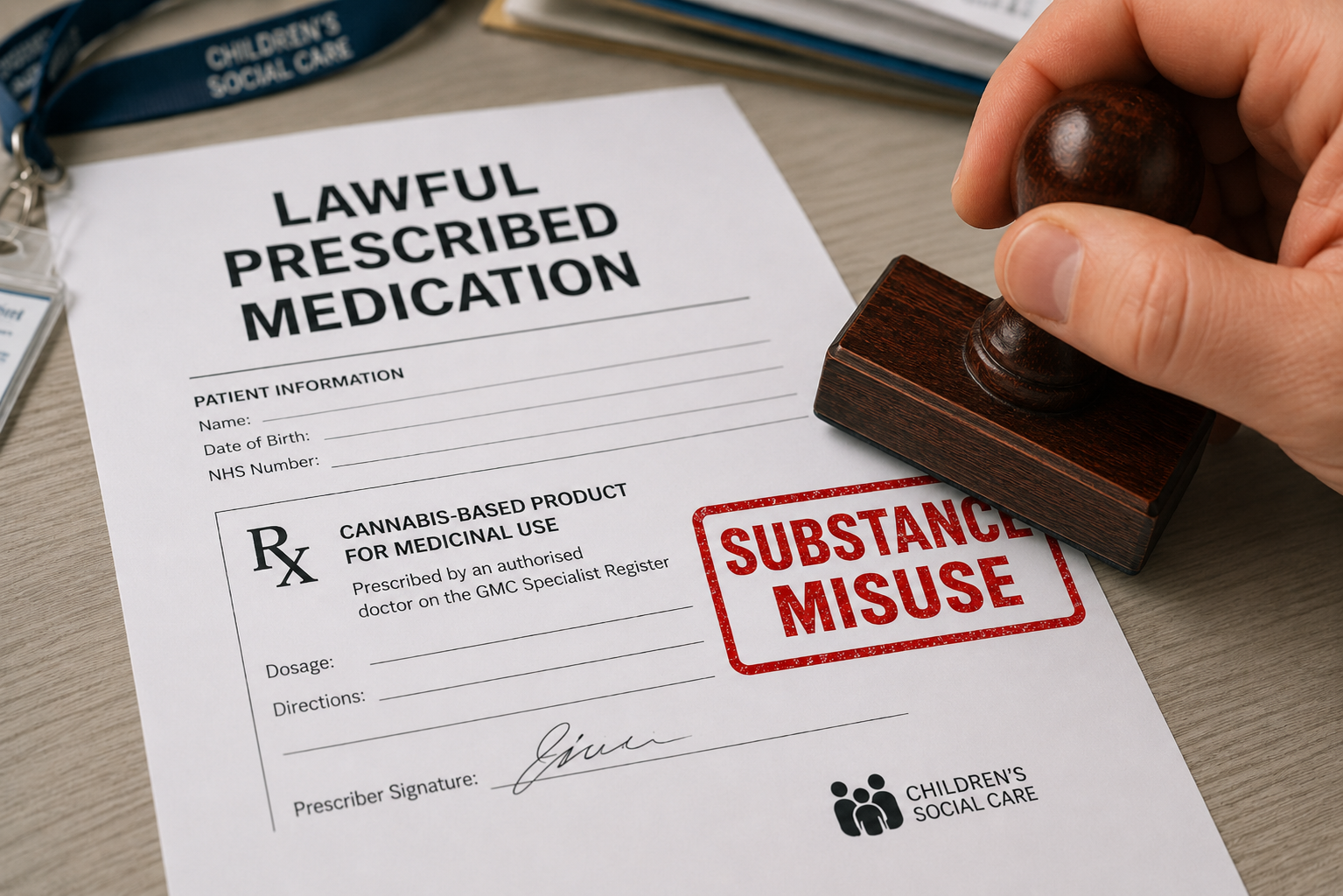
Since 1 November 2018, doctors on the General Medical Council’s specialist register have been able to prescribe cannabis-based products for medicinal use, under Home Office regulations that rescheduled the products to allow a legal prescribing route. That’s the legal position. It hasn’t stopped three councils answering a straightforward question about staff using prescribed medication with their drug and alcohol misuse policies.
I sent Freedom of Information requests to local authorities asking what recorded policy they hold on staff, carers, agency workers, contractors and commissioned providers in children’s social care who use lawfully prescribed controlled drugs, including cannabis-based products for medicinal use, known as CBPMs. Each request stated plainly that it was not about illicit drug use.
Gateshead, Middlesbrough and Sunderland, through its delivery company Together for Children, responded by sending their drug and alcohol abuse policies.
Gateshead
Gateshead said it holds no recorded information referring specifically to prescribed medical cannabis, CBPMs or prescribed cannabis for staff, carers or commissioned workers in children’s services. It also said it holds no specific guidance on how lawful prescribed controlled-drug use should be assessed for fitness for work, safeguarding risk, medication storage, disclosure, driving, lone working or direct work with children.
What it sent was its Alcohol and Drug Abuse Policy. The policy attributes substance abuse to “violence, crime and other anti-social behaviour”, and states that an employee under the influence of alcohol or drugs at work faces immediate disciplinary action. Gateshead’s response confirms it holds no policy distinguishing illicit drug use from lawful prescribed use, impairment, lawful off-duty use or lawful possession of a prescribed medicine.
Middlesbrough
Middlesbrough gave the same answer. It said it holds no recorded information on prescribed medical cannabis, CBPMs or prescribed cannabis, and nothing covering how lawful prescribed controlled-drug use affects fitness for work, safeguarding, driving, lone working or direct work with children. It said such situations would be handled individually, through risk assessment and Occupational Health.
It then sent its Smoking, Alcohol and Drugs at Work policy and a blank, generic risk assessment template. The policy bars employees from being “affected by alcohol or illegal drugs” during working hours and from possessing illegal drugs at work. It does not mention prescribed medication anywhere. The risk assessment template is a standard hazard form with boxes for control measures and review dates; nothing on it relates to medication or disclosure.
Sunderland / Together for Children
Sunderland’s response, handled by Together for Children, the council-owned company running its children’s services, didn’t address the numbered questions directly. It pointed to its Alcohol and Substance Misuse HR Policy and Procedure.
This document goes further than the other two, and not in a useful direction. It defines medication as drugs requiring a personal prescription, or bought over the counter, then folds medication into a wider definition of “substance” alongside drugs and alcohol. Clause 5.7.2 prohibits use, possession, distribution or being under the influence of alcohol or any controlled drugs at work or on company property, and states this “may be regarded as gross misconduct.”
As written, that clause makes no exception for a lawful prescription. Someone prescribed a controlled medicine, including a CBPM, who possesses or takes it during a shift, falls under wording built for testing, discipline and gross misconduct. The same policy sets out reasonable-cause testing, post-incident testing and positive-result procedures, none of which separate a result caused by lawful medication from one caused by illicit use.
None of this is an argument for treating medical cannabis casually. Children’s social care involves direct work with children, lone working, driving and home visits, and questions about impairment in those settings are legitimate ones to ask. But the documents these three councils sent don’t ask those questions, because they aren’t built to. They assume drug use means misuse, so a lawful prescription gets read through a policy written for someone who has broken a rule, not someone following a doctor’s instructions. None of the three could point to anything on disclosure, occupational health referral, or how a lawful prescription should be treated differently from a positive drugs test.
The practical effect is that the decision falls to whoever happens to be holding the policy at the time. A manager dealing with a disclosure has nothing written down telling them that a prescription isn’t the same as a breach.
All three responses are now the subject of a request for internal review.
Further reading
- DVLA FOI reveals no guidance on medical cannabis — the same gap turns up on the roads: DVLA holds no CBPM-specific policy and makes no distinction between a lawful prescription and drug dependence.
- Drug Driving Or Prescription Use? Crown Court Draws The Line — a Crown Court overturned a drug driving conviction against a medical cannabis patient after magistrates treated his lawful prescription as if it had expired.
- CBPM Privacy Policies: A Public-Facing Disclosure Audit — a sector-wide scan of UK cannabis clinics and pharmacies found most don’t clearly disclose how patient data is retained or handled.
- NECA says its FOI process is impartial. Its own guidance says otherwise. — a separate FOI investigation into how the North East Combined Authority’s own conflict of interest rules line up with its FOI handling.
- FOI reveals how the Met Police dealt with 737,198 speeding cases in 2025 — a breakdown of how the Met actually disposed of speeding cases last year, by enforcement threshold.
Sources: FOI responses from Gateshead Council, Middlesbrough Council, and Sunderland City Council / Together for Children, together with the attached Alcohol and Drug Abuse Policy, Smoking, Alcohol and Drugs at Work policy, and Alcohol and Substance Misuse HR Policy and Procedure disclosed in response. Background on the legal prescribing route: Home Office Circular 2018: Rescheduling of cannabis-based products for medicinal use in humans.
Be First to Comment