Freedom of Information requests are not a side hobby at The Reasonable Adjustment, they are a core part of how we do public interest work. Used properly, FOI lets you pull policy, training, spending and decision making out of the filing cabinet and into public view, where it belongs.
We treat FOI as a strategy, not a one off letter. That means clear questions, repeatable patterns, and a paper trail that can stand up in front of the Information Commissioner’s Office (ICO) if a public body tries to shut the door instead of following the law.
How The Reasonable Adjustment uses FOI
Our FOI work focuses on the things that show how systems really operate. In practical terms, that means we target:
- internal policies, guidance, and training material
- governance documents, meeting papers, and decision templates
- monitoring reports, KPIs, and audit findings
- correspondence that shows who knew what, and when
We are not trying to squeeze apologies out of FOI teams. We are trying to get the documents that explain how decisions are made, so people can see patterns across time, departments, and public bodies.
When public bodies misread FOI law, we use the ICO’s own guidance on what makes a valid request and the detailed note on section 8 and the “name of the applicant” to push back with chapter and verse, not vibes.
FOI in action: the Japan trip example
If you want a concrete example of our public FOI strategy in the wild, start here:
High-viz Kim: the Japan trip FOI
That piece walks through a real request about an overseas trip, plus the disclosures and the follow up commentary. You can see the whole chain in one place, from the original FOI wording to the documents that came back and the questions those documents raised.
It is only one example, but it shows how we use Freedom of Information to:
- surface spending and travel decisions that would otherwise sit quietly in the background
- compare what public bodies say in press releases with what they record internally
- give readers primary source material, not just opinion
Case study: public funding “caught in 4K”
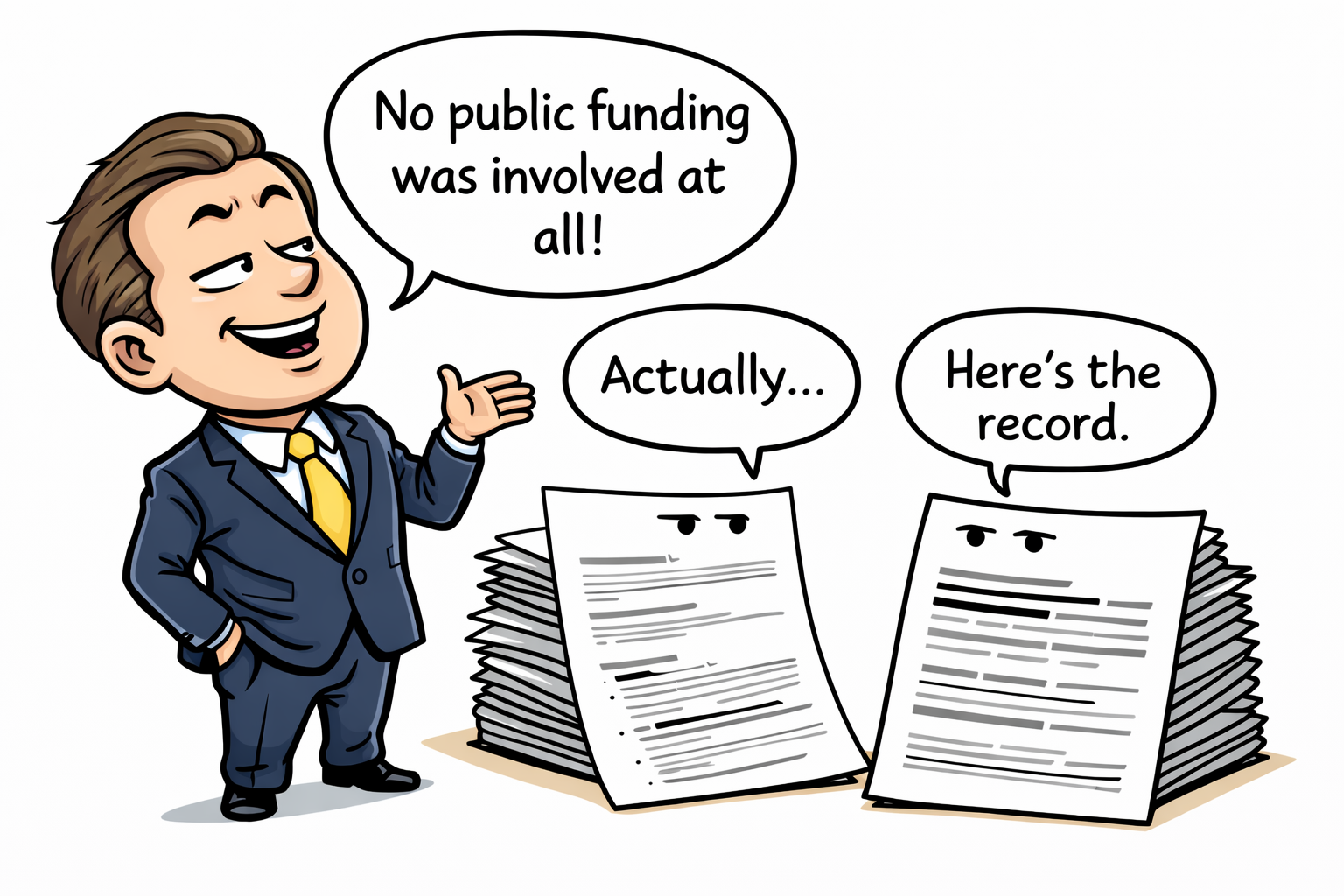
FOI is just as useful when the story is not a photo op abroad but a funding trail at home. In Caught in 4K: The Recruitment Junction public funding trail, we walk through council payment records and monitoring reports that show how much public money was actually paid to a charity that had publicly downplayed its funding.
That article sits on top of itemised FOI disclosures from Newcastle City Council. It shows how funding lines, monitoring returns and small grant paperwork can be used to check whether public statements about money match the underlying documents.
Making the full FOI archive public
Not every FOI goes through WhatDoTheyKnow. Some of the most important documents in the Recruitment Junction story were originally released directly by Newcastle City Council in email chains and attachments, which meant they were technically “available” but not easy for anyone else to find, link, or search.
To fix that, we created an open document hub:
Newcastle City Council FOI: The Recruitment Junction archive
That page brings the full FOI disclosure set into one place, with the original PDFs hosted on The Reasonable Adjustment so they can be cited, bookmarked, and indexed by search engines. Before that archive existed, the material was scattered in private inboxes and local folders. Now anyone can read the same source documents and check our analysis against the primary evidence.
See the FOI work behind the articles
The Reasonable Adjustment publishes finished pieces, but the FOI work behind them is fully visible too. You can see live and historic requests on WhatDoTheyKnow:
WhatDoTheyKnow profile for Jamie Halliday
That profile shows the raw FOI activity as public bodies see it, including:
- requests already answered
- requests in progress
- clarifications, refusals, and challenges
It is not a tidy portfolio, it is the working front end of our FOI strategy. If you want to understand how we push on weak reasoning, cost excuses, or attempts to misread the legislation, that is where you will see it.
If you use WhatDoTheyKnow and you value the fact that requests and responses stay online for everyone, consider supporting them. You can read more and donate via mySociety here:
Support WhatDoTheyKnow and mySociety
FOI coordination and the Jamie Halliday working name
FOI work is coordinated centrally so that requests line up with each other and the record keeping is clean. The contact point for all of that is:
Requests and follow up are usually made in the working name Jamie Halliday. That identity is already known to the ICO and to multiple UK public bodies through previous FOI requests, including cases that have attracted media coverage.
Jamie Halliday’s FOI work has been referenced and discussed in regional and international coverage. Examples include:
The underlying requests and responses remain publicly accessible on WhatDoTheyKnow, so readers can check the primary documents directly, rather than relying on summaries.
Helping others use FOI properly
FOI should not feel like a specialist trick that only a handful of people can use. If you are an individual, a small organisation, or a community project, we would rather help you put in a strong request yourself than have you bounce off a badly worded one.
Subject to capacity and relevance, we can:
- help you turn a concern into a focused FOI request that has a clear scope
- suggest which public body is most likely to hold the information you need
- tighten wording to avoid easy cost limit or “not held” refusals
- explain when you should be using FOI and when you should be using a Subject Access Request instead
- support you to submit in your own name so you stay in control, while we stay in the background as a sounding board
In some cases, where there is a clear wider public interest, we may also put in a request ourselves and publish the outcome on The Reasonable Adjustment. That depends on sensitivity, consent, and the likely value of the material.
Standards, not vibes
FOI at The Reasonable Adjustment is treated as an advocacy function, not a legal service. We do not provide legal advice and we do not represent people in court. What we do insist on is a basic set of standards every time:
- clear questions that are rooted in the wording of the Act and ICO guidance
- requests that are proportionate and time bounded, not random fishing trips
- a written record that shows exactly how a public body handled the request
- willingness to escalate to internal review or the ICO when the law is being bent out of shape
If a public body answers cleanly, we say so. If they misinterpret the law, hide behind policy that does not match FOIA, or try to block access with unjustified ID demands, we say that too, in public, with documents attached.
That is what our public FOI strategy is for. It gives people something more useful than a rant, it gives them evidence. And once evidence is out in the open, it tends to travel a lot further than a complaint email ever will.
If you need to talk about an FOI idea or you want help shaping a request, contact us at [email protected].

Be First to Comment