Robson Laidler Director Responds to Public Interest Warning with One-Line Dismissal
Audit firm Robson Laidler is under scrutiny after a senior director dismissed serious public interest concerns with a single-line email. The concerns relate to the firm’s role as Independent Examiner for The Recruitment Junction CIO (Charity No. 1191442), a charity currently under rights-based challenge.
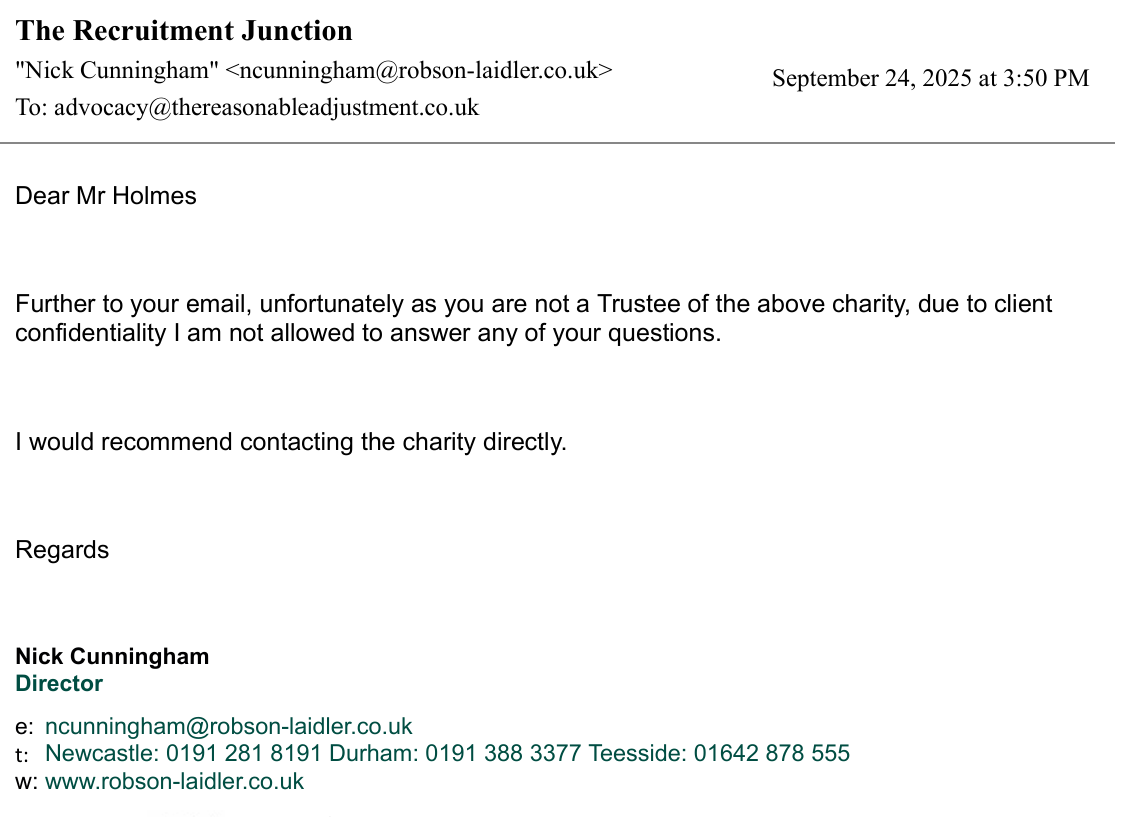
Despite raising issues grounded in statutory examiner duties, Charity Commission guidance, and whistleblower policy content, Director Nick Cunningham responded simply:
“Unfortunately as you are not a Trustee of the above charity, due to client confidentiality I am not allowed to answer any of your questions.”
This response came after Mr Holmes, founder of The Reasonable Adjustment, submitted a professionally worded query outlining governance risks, digital security issues, and potential breaches of examiner responsibilities. The firm’s own Whistleblower Protection Policy welcomes concerns from “staff, clients, suppliers and stakeholders.”
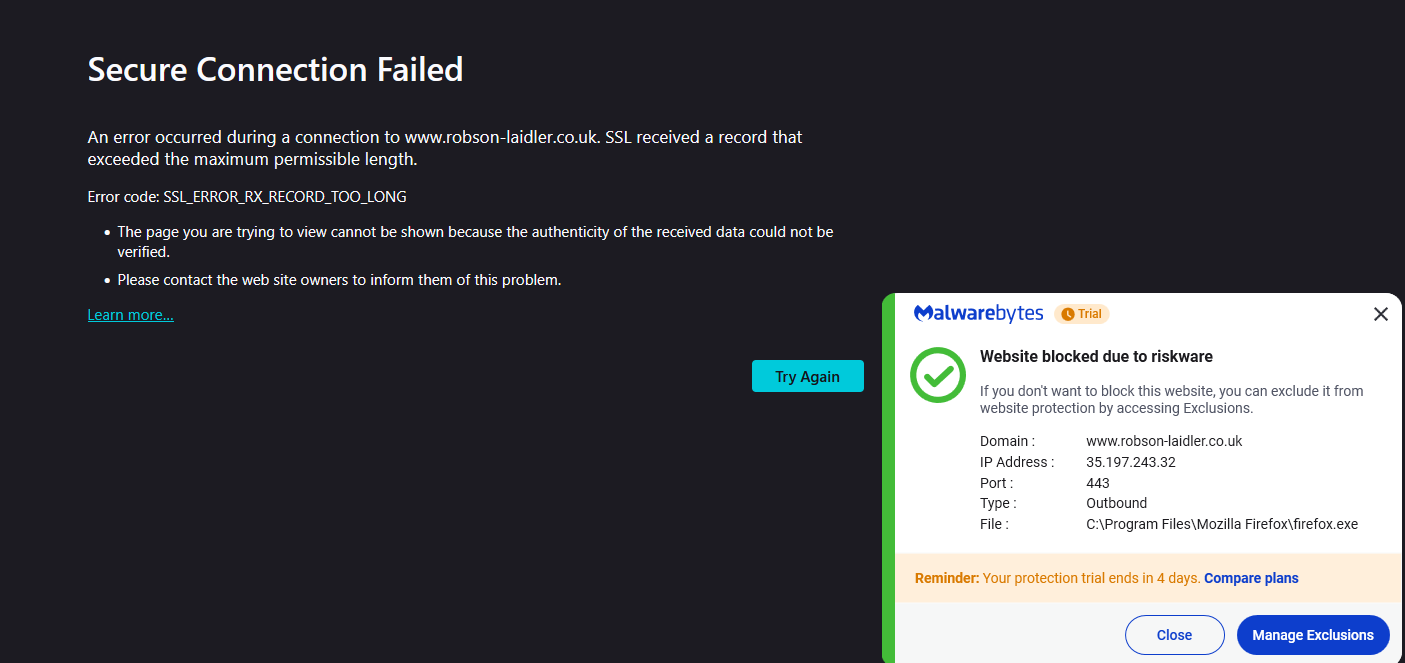
But when Mr Holmes attempted to review that policy in detail, Malwarebytes blocked the firm’s website due to suspected certificate misconfigurations. The only way to proceed was to manually override security warnings — an act that triggered further concern given Robson Laidler’s public-facing obligations.
Following manual review of the firm’s whistleblowing framework, a formal escalation was submitted under the policy. That escalation referenced the firm’s duties under:
- The Charities Act 2011
- The Charities (Accounts and Reports) Regulations 2008
- Charity Commission guidance CC32
The Robson Laidler policy also guarantees acknowledgement of concerns within five business days and a fair investigation process.
Oddly, this is not the first time a director has personally intervened in what should have been a basic process query. It’s becoming a pattern – where senior figures step in early to block scrutiny, rather than let routine governance questions be handled by the appropriate staff. Perhaps this explains why some of these firms are always too busy. They’re micromanaging concerns that clearly shouldn’t require boardroom escalation.
Whether Robson Laidler will now respond in accordance with their own published standards remains to be seen. But for a director to ignore clear procedural obligations and dismiss a whistleblower request without even reviewing the material is already raising eyebrows across the charity governance space.
More updates will follow as the story develops.



Be First to Comment