My community sentence ended on 26 December 2025.
That date matters. From that point on, the Probation Service no longer had any power over my liberty, my licence, or my day to day life. What it still has is responsibility for how my case was handled, and accountability when those decisions are challenged.
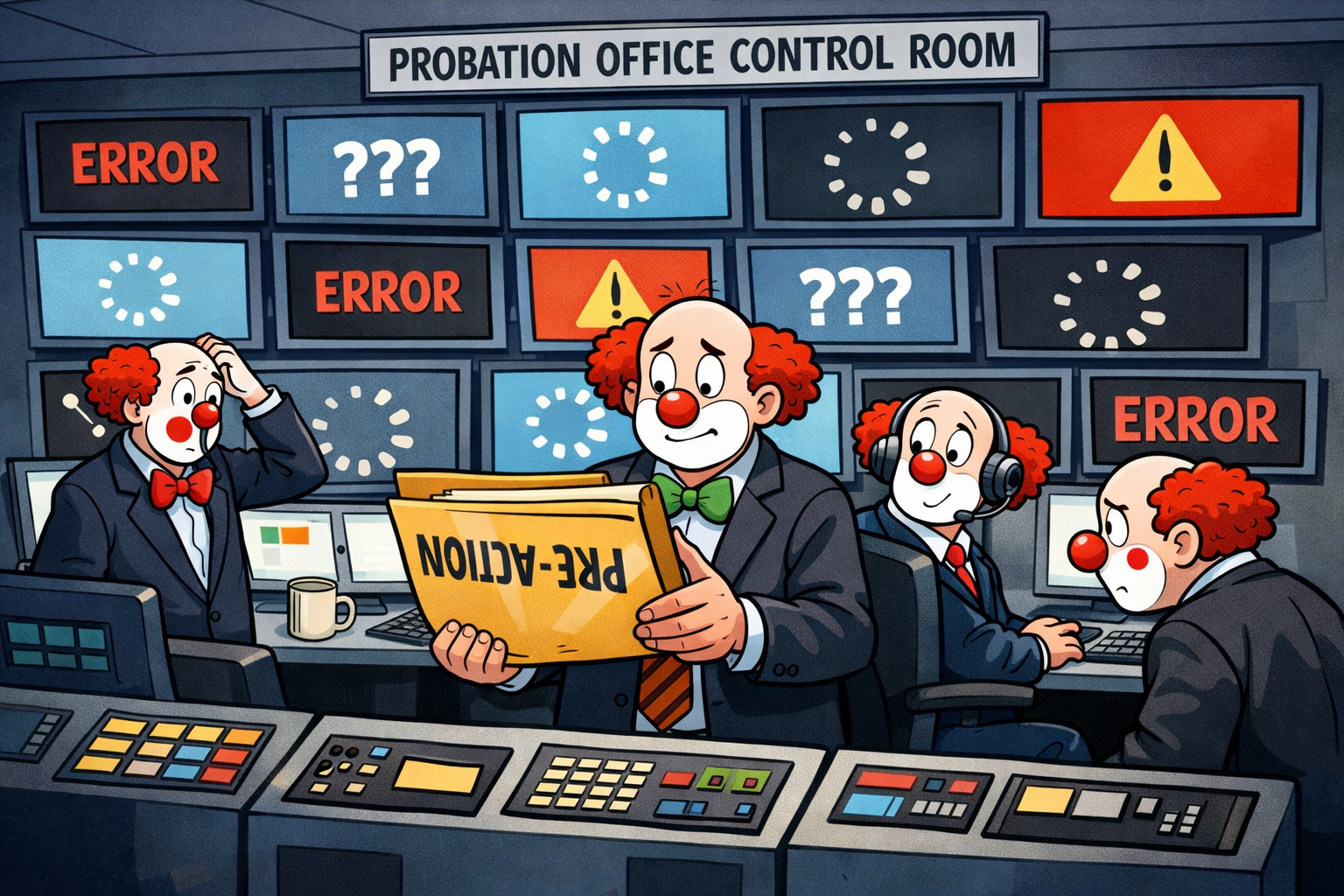
So on 29 December 2025, I did something very ordinary and very reasonable, I asked them who to sue, where to serve, and who handles pre action correspondence if I decide to take things further.
And then they went very quiet.
A simple request, who is the defendant and where do I serve
On 29 December I emailed [email protected], copied to [email protected].
All I asked for was:
- The correct legal name of the defendant body for civil proceedings arising from alleged failings in probation supervision and related decision making in their region.
- The correct postal address for service of a letter before action under the relevant pre action protocol.
- The appropriate team or role such correspondence should be marked for, and any standard email used for pre action letters.
That was it. No grandstanding, no fifteen page witness statement, just a basic practical question, who are you in law, and where should I send a pre action letter.
For a public authority that sits inside the justice system, this should be the easiest email of their week.
First follow up, selective silence
They ignored it.
On 31 December 2025, I sent a follow up. I pointed out that they had replied to other emails from me at the same address in the same period, while this one mysteriously received nothing at all.
I repeated the three questions and asked them to:
- Confirm receipt of my original email of 29 December, and
- Say when I could reasonably expect a substantive response.
Again, this is basic fairness. If the Probation Service wants people to respect deadlines and rules, the least it can do is acknowledge a lawful request about its own potential liability.
No acknowledgement, no holding reply, nothing.
Second follow up, saying the quiet part out loud
By 2 January 2026, it was obvious this was not just an inbox glitch.
So I sent a second follow up and this time I said the quiet part out loud. I pointed out that the email they were not engaging with was the one asking who the correct defendant is, where to serve, and who handles that correspondence.
For an institution that forms part of the backbone of the justice system, that is hard to view as anything other than evasive.
I reminded them that staff and service users are expected to respect orders, rules, and time limits every day. When a member of the public asks, in good faith, for clarity so that any pre action correspondence is properly directed, silence is not an acceptable response.
I then gave them a clear deadline to confirm receipt of my 29 and 31 December emails and to answer the same three questions they had been sitting on for days.
I also made one thing explicit, if they refuse to provide basic information, I will proceed using the best information available from public sources and I will tell the court that I tried, repeatedly, to clarify the correct defendant and service details and was ignored.
That is not a threat, it is simply a description of the litigation reality they are slowly building for themselves.
Why this matters now my sentence has ended
While I was under supervision, Probation held real power, breach, recall, reports that could affect my liberty.
That power is now gone. My sentence ended on 26 December 2025. They cannot use licence conditions or recall as a pressure tool. What is left is their culture and their ethics.
So this becomes a useful test.
- When they cannot lean on authority, do they lean on transparency, or on silence.
- When someone raises potential legal proceedings, do they help make the route clear, or hope that confusion will put people off.
Right now, the message is pretty transparent, just not in the way they intend, if you are a former service user who might sue us, expect to work out the basics yourself.
Access to justice should not depend on guesswork
Knowing the correct defendant and service address is not a luxury detail. It affects:
- Who you name in a letter before action.
- Where you send it.
- Whether they can later argue that you sued the wrong body or served the wrong office.
The Ministry of Justice likes to talk about access to justice. It funds leaflets and strategies, and it lectures others about fairness, process, and proportionality.
Then, when asked a three line practical question about its own potential liability, it goes quiet.
If that is how they behave with someone who documents everything, attaches evidence and is quite prepared to litigate, what does it look like for people who are scared of the system, have low literacy, or simply do not have the time and energy to keep chasing.
What happens next
I have already been clear with them, if they will not provide this information, I will not sit here waiting indefinitely.
I will:
- Use what can be pieced together from public records, guidance, and official sites.
- Address any pre action correspondence accordingly.
- Put in front of a court the paper trail showing that I asked three times for clarity and was met with silence.
If the justice system wants respect, it has to model it. At the very least, it should be able to answer the question, who are you, legally, and where should I send a letter before action.
Right now, NEPS is struggling with even that.
Evidence, the emails in full
For readers who want to see the primary documents, you can read each email as a PDF below:
- Request for contact details for pre action correspondence, 29 December 2025
- First follow up, 31 December 2025
- Second follow up, 2 January 2026
These are not dramatic documents. They are calm, factual, and focused. That is exactly why the silence around them is so revealing.


Be First to Comment