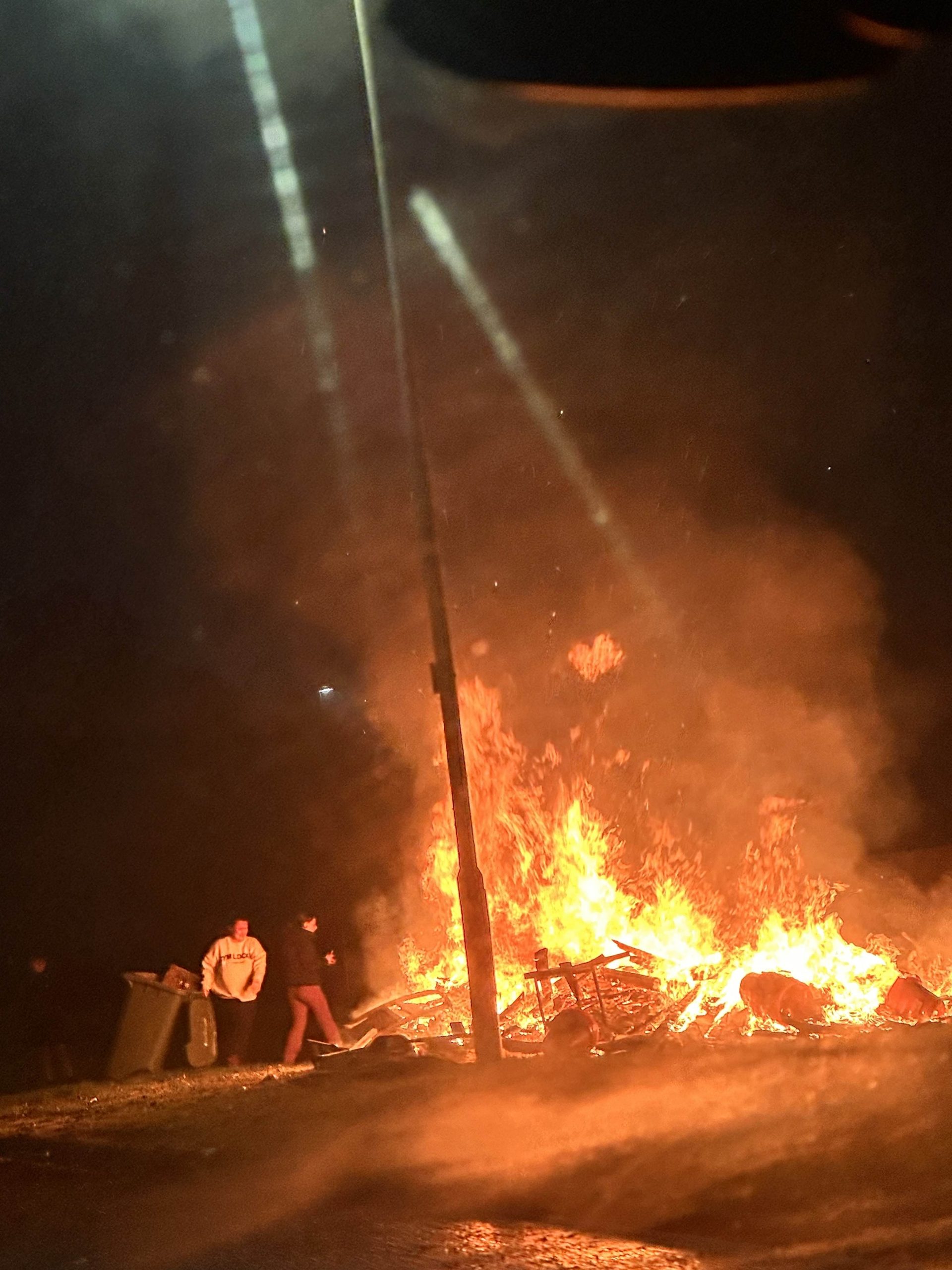
Smoke hits your throat before you see the fire. Kids run in little packs with sparklers. Folding chairs appear from nowhere. An old sofa becomes a stage. On many council estates, Bonfire Night is not a commercial display, it is a neighbourhood ritual people shape together. That does not make it harmless.
Fireworks vs Fires, a Note on Noise and Respect
Fireworks are spectacle without responsibility. They rattle windows, terrify animals, and too often arrive with no one to answer for them. Community bonfires follow a different logic. You know who lit the fire, you know who is watching it, and there is an unspoken code: do not ruin it for everyone else. One is anonymous disruption, the other is collective action with consequences. That difference explains why some bonfires feel safer, but it does not remove risk.
What Community Looks Like at Night
These nights reveal how practical community actually is. Neighbours swap food and tea. Someone organises a kettle. Older residents keep a sharper eye on the kids than any paid marshal would. Informal childcare, ad hoc first aid, and low level conflict resolution all happen in the light of those fires.
There is also ritual management. Someone becomes the de facto fire warden, another becomes the pyrotechnics negotiator. That does not excuse dangerous behaviour, and it does not replace proper safety measures.
The Downsides, Clearly Stated
Large estate bonfires produce smoke, pollution, and litter. People sometimes burn treated timber, plastics, or other materials they should not, creating toxic fumes. Fireworks cause injuries and can start accidental fires. Vehicles and bin stores near a large fire are at risk. Ambulance or fire service access can be compromised if exits are blocked. These are immediate hazards that must be taken seriously.
Practical Ways to Keep It Safer
Simple, low-effort measures materially reduce risk:
- Agree a start and end time, and publish it in advance.
- Designate sober marshals with high-visibility markers and charged phones.
- Keep emergency access routes clear, and move parked cars that block exits.
- Do not burn treated wood, plastics, mattresses, tyres, or painted items.
- Keep water, sand, blankets, and basic first aid close at hand.
- Warn neighbours with vulnerable people or pets in advance and offer a quiet zone.
If Things Go Wrong
Call 999 for uncontrolled fire, rapidly spreading flame, or any serious injury. Move people away from smoke and heat, keep a clear route for emergency vehicles, and appoint someone to meet the crew and guide them in. Do not use petrol or improvised accelerants. Document the incident afterwards with photos and witness details.
Legal and Civil Risks
Dangerous or reckless behaviour can lead to police investigation, criminal charges, fines, and civil liability for damage or injury. Local authorities can step in when public safety or environmental harm is present. Running a community event without basic safeguards can be legally risky.
A Dozen Fires and a Quiet Truce
Tonight there were about a dozen large fires across the estate. Police were present to hold the perimeter and step in if required. Nobody wanted escalation. Everyone knew the rules, even when they pretended not to. That is controlled chaos, but it is close to the edge when alcohol, fireworks, or combustible waste are added to the mix.
Local councils and fire services will step in if a bonfire becomes dangerous, blocks emergency access, or burns prohibited waste. Lighting fires on council or public land without permission can attract fines. If you see immediate danger, call 999. For organised displays, speak to your local council early and ask what support they can offer.
If your estate has a tradition, or if you have a memory worth keeping, share it in the comments below. What does Bonfire Night look like where you live, and what rules keep your community safe?
Be First to Comment