Why is it easier to see a gambling advert than to get a medical cannabis prescription? The UK’s laws treat these two issues very differently, yet the statistics on harm tell a story that few politicians want to confront.
Gambling: a legal industry with lethal consequences
Problem gambling is strongly linked with suicide. Studies show that almost one in five people with gambling disorder have suicidal thoughts in a given year. Around five percent attempt suicide. By comparison, the general population rate is far lower, at four percent for thoughts and less than one percent for attempts.
Government estimates suggest between 117 and 496 suicides every year in England are linked to gambling. Campaign groups put that figure higher, at up to 650 deaths across the UK. In other words, hundreds of families lose someone each year where gambling played a central role.
The wider harms are not limited to suicide. Relationship breakdown, loss of money and possessions, abuse, crime, and mental health decline all track closely with gambling harm. The Gambling Commission found that almost three percent of people who gambled in the past year reported a severe consequence directly tied to it.
Cannabis: criminalised with weaker links to fatal outcomes
Cannabis remains a Class B drug in the UK. Possession can carry a prison sentence. Yet the evidence connecting cannabis to suicide and death is far weaker. Studies find some association between heavy or early cannabis use and higher rates of depression or suicidal thoughts, but once you adjust for mental health history and social factors the link is far less clear.
Completed deaths from cannabis toxicity alone are vanishingly rare. A twenty-year study in England found only a single case where cannabis was listed as the sole cause of death. Most cases where cannabis appears on a death certificate involve other substances or wider circumstances such as accidents.
The comparison in black and white
| Dimension | Gambling | Cannabis |
|---|---|---|
| Suicidal thoughts | ~19% of problem gamblers | Associations found in some studies, weaker once adjusted |
| Suicide attempts | ~5% of problem gamblers | Mixed evidence, often confounded by other factors |
| Annual deaths in England | 117–496 suicides linked to gambling | Almost zero from cannabis alone |
| Other harms | Debt, relationship breakdown, abuse, crime, higher mortality | Mental health risks, dependency in some users, respiratory harm |
The UK’s policy contradiction
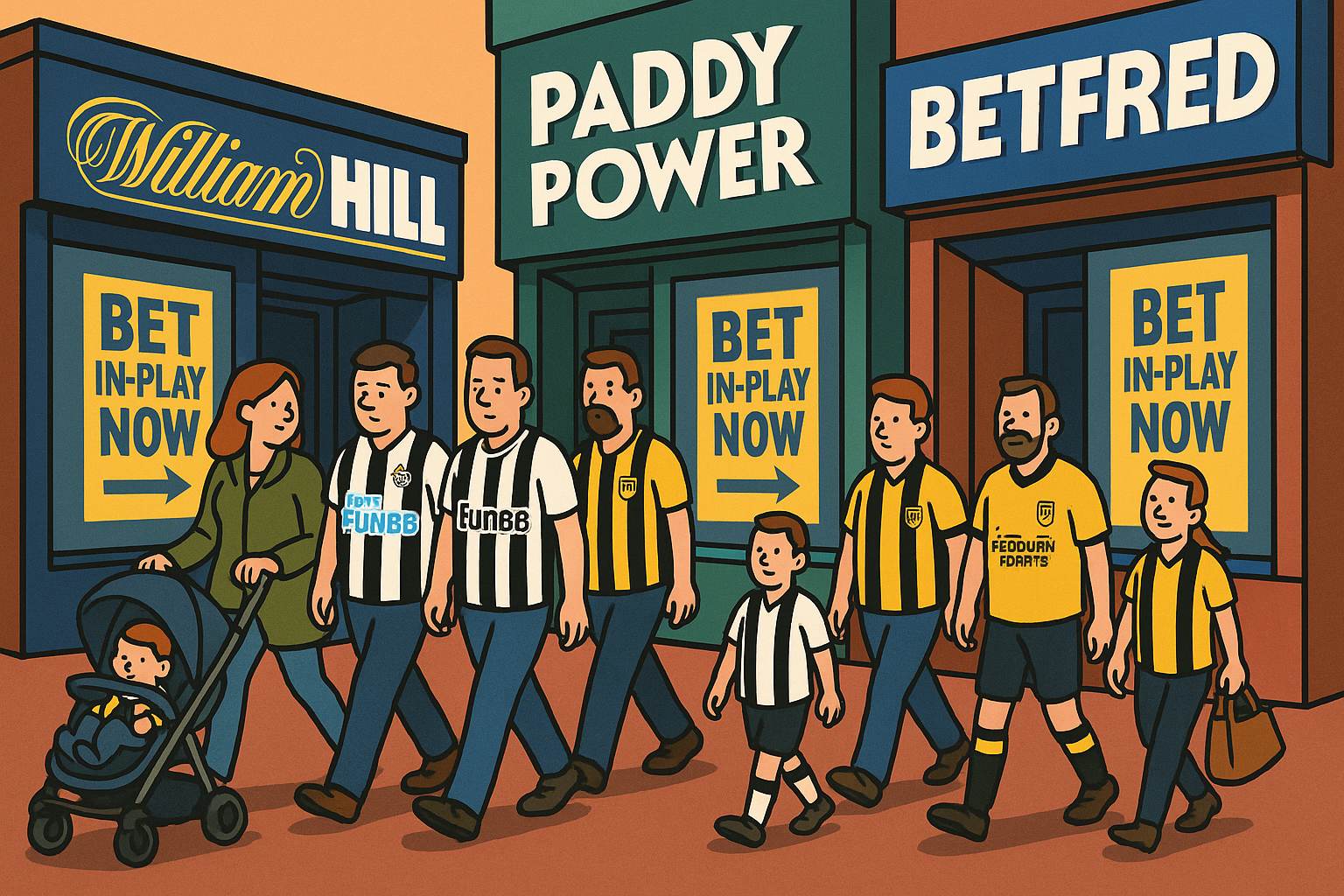
Gambling is everywhere. It sponsors football teams, floods TV adverts, and props up billions in Treasury revenue. Cannabis, meanwhile, is criminalised, with only narrow access for private medical patients. The net result is a bizarre double standard: the activity that is legal and promoted at scale has stronger evidence linking it to suicide, while the activity that is criminalised shows far weaker fatal outcomes.
Impact on our high streets
It is not just about statistics. Walk down almost any high street in the UK and you will see the reality: rows of brightly lit betting shops, often clustered together in the most deprived areas. These shops are designed to extract money from people who can least afford to lose it.
The social impact is impossible to miss. In one striking example, parents were seen taking turns to push a baby in a pram outside while the other went inside to gamble. That scene captures the everyday grip of gambling far more than any government report ever could.
Instead of shops that serve the community, our town centres are increasingly dominated by fixed-odds betting terminals and bookmakers. This normalises gambling in daily life, exposing children and young people to it as if it were just another part of shopping. The damage is not only financial but cultural, reshaping what our high streets represent.
What should change?
If the UK applied a tobacco-style public health model, gambling adverts would be gone completely. People who want to gamble would still be able to go to casinos or betting shops, but without constant advertising pressure normalising the habit. At the same time, cannabis could be treated as a regulated health and social issue rather than a criminal one.
Policy is ultimately about choices. Right now the choice is profit over people. Hundreds of gambling-related suicides each year show the cost of that decision.
Be First to Comment