
Last updated on September 3, 2025
⚡ The Myth of Excessive Communication – Efficiency, Not Discrimination
By Kieron JH
One of the only criticisms I hear is that my communication is “too much.” Too many emails, too detailed, too fast. The reality is different: it is not about volume for the sake of it. It is about speed, efficiency, and accountability.
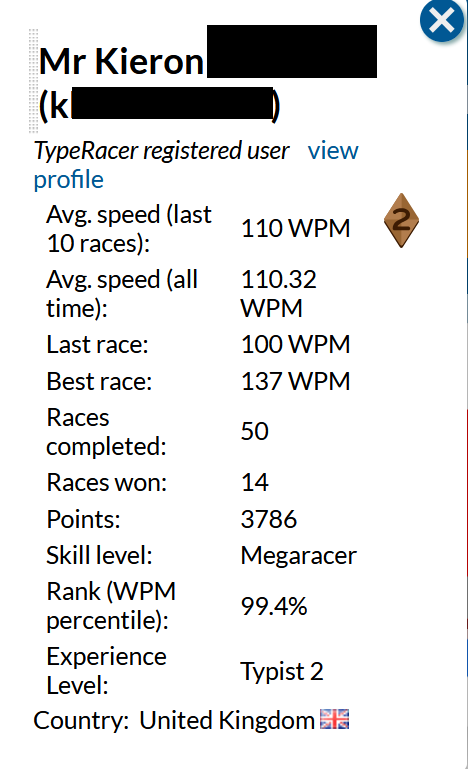
Typing at a conservative 100–110 words per minute means I can work through text faster than most people. For context, the average professional types at around 40–50 wpm. What looks like high volume is simply the natural result of being able to record and send information efficiently.
📊 The Numbers in Context
Time to write 1,000 words:
- 30 wpm → ~33 minutes
- 50 wpm → ~20 minutes
- 70 wpm → ~14 minutes
- 90 wpm → ~11 minutes
- 100–110 wpm (me) → ~9–10 minutes
Over 10,000 words a week (emails, reports, case notes):
- 30 wpm → ~5.5 hours
- 50 wpm → ~3.3 hours
- 70 wpm → ~2.4 hours
- 90 wpm → ~1.8 hours
- 100–110 wpm → ~1.5 hours
This saves several hours every week compared to most people. Over a year, it adds up to more than 100 extra hours, the equivalent of multiple working weeks.
🚫 Why “Excessive” Misses the Point
When communication gets labelled as “excessive,” it usually means the other side feels under pressure. They know it is not harassment, vexatious, or unreasonable, because those words carry legal consequences. Instead they fall back on “excessive,” a term that sounds negative but has no legal standing. It is a way of saying: “we do not like the pace, but we cannot fault the substance.”
The irony is clear. If I were inside their organisation producing the same level of detailed and timestamped communication for their benefit, it would be praised as diligence and professionalism. The standard shifts not because the work changes, but because the target does.
⚖️ Case Law and Discrimination
Employment tribunals and courts have recognised that dismissing or penalising thorough communication can amount to discrimination when linked to disability or protected characteristics. For example:
- Gallop v Newport City Council [2013] EWCA Civ 1583: emphasised that employers must properly consider disability related communication needs, not dismiss them as troublesome.
- Paterson v Commissioner of Police of the Metropolis [2007] EWCA Civ 253: showed how failing to adjust communication processes for dyslexia constituted disability discrimination.
- HM Prison Service v Johnson [2007] IRLR 951: confirmed that what may be seen as persistent communication can actually be a manifestation of disability, requiring reasonable adjustments rather than criticism.
These cases underline a key point: labelling detailed communication as excessive, without considering the context of disability or efficiency, risks crossing into discrimination under the Equality Act 2010.
✊ Efficiency, Not Excess
I do not write quickly to overwhelm people. I do it because I can, and because it ensures accuracy, accountability, and evidence. Thoroughness should not be rebranded as excess simply because it makes an organisation uncomfortable. What is called “excessive” on the outside would be applauded as commitment if done on the inside.



Be First to Comment