The Recruitment Junction – 27 Grants, £542,900, and One Big Oversight Problem
Public Money, Private Gatekeeping: The Recruitment Junction’s £500k Plus Question
Summary: Since 2020, The Recruitment Junction has taken well over £500,000 in grants. This year, within 20 minutes after I sent polite feedback to the CEO about their approach, my support was withdrawn and my emails were blocked. No safeguarding review, no independent route, no lawful data response. This feature brings the funding picture together with the timeline and sets out what responsible oversight should look like.
The funding picture
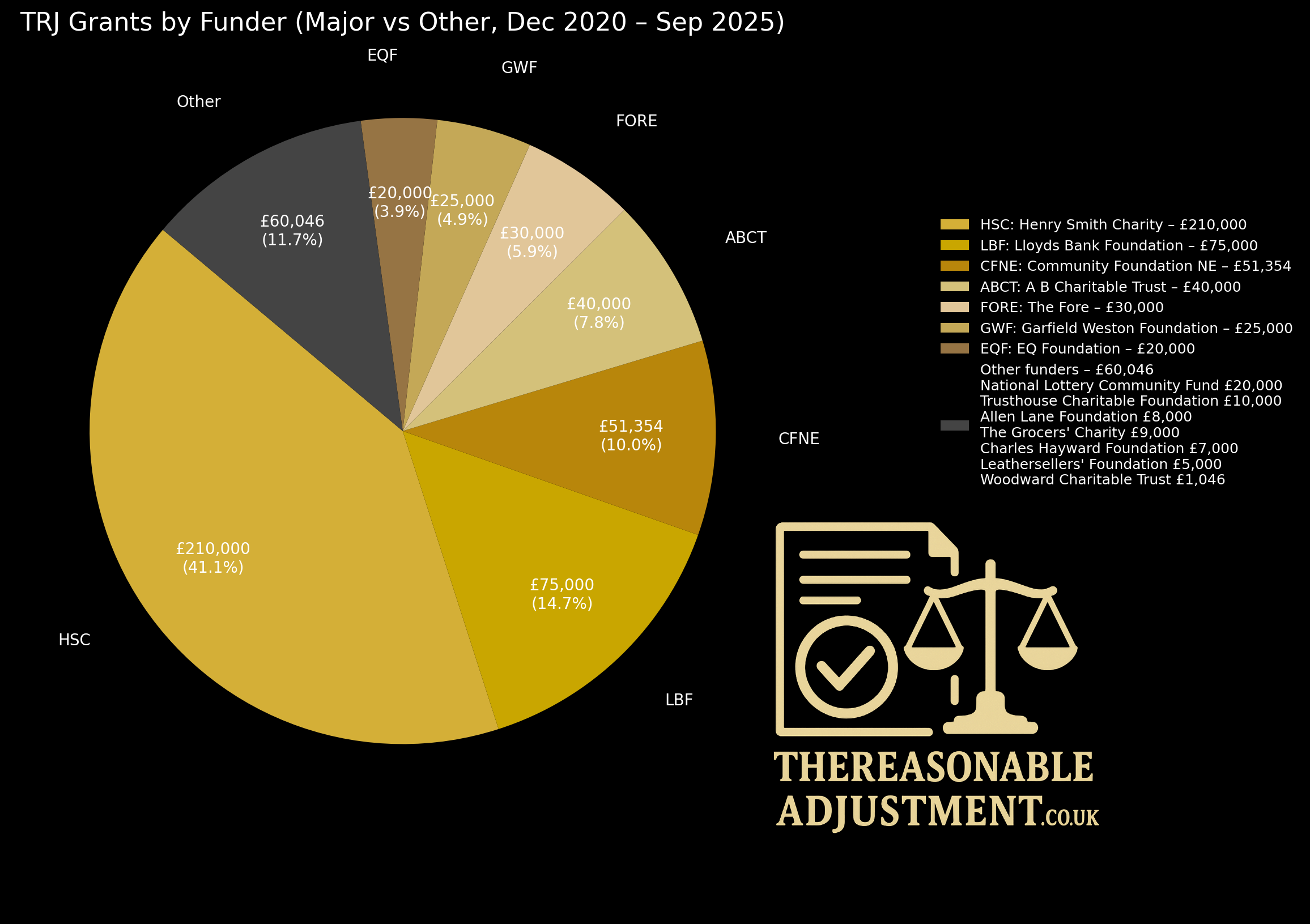
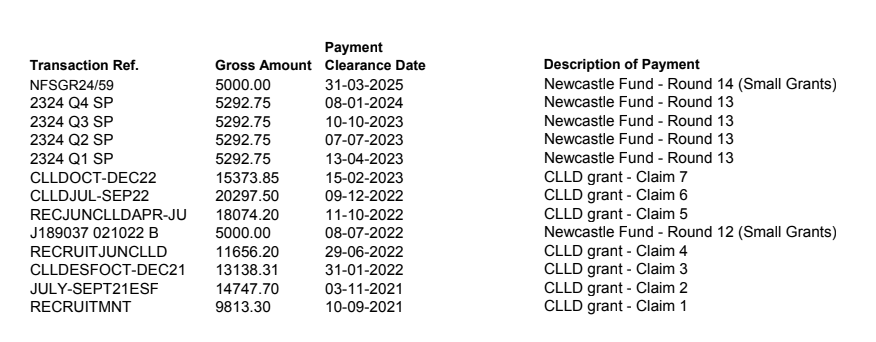
Across five years, TRJ appears repeatedly in grant data, with a total comfortably above £500,000. The profile includes major foundations, a community foundation footprint in the North East, and lottery awards. This is not a shoestring project. It is a publicly backed programme with duties to the people it serves and to the public purse.
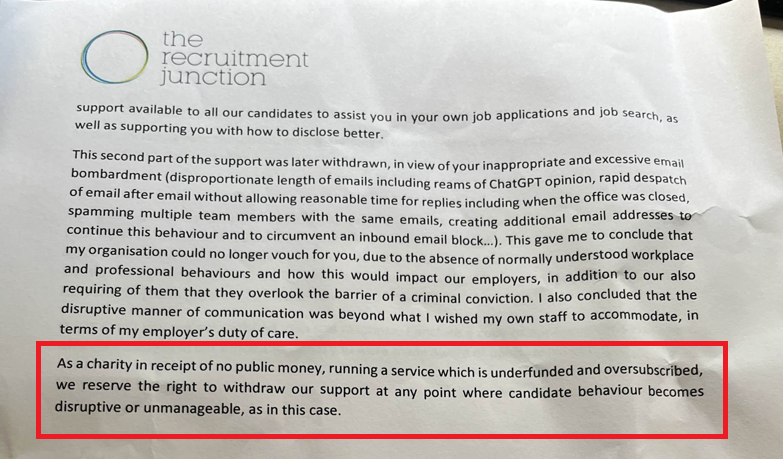
Funding evidence
Every grant link below comes from 360Giving GrantNav exports saved in the Funding archive. The list is ordered by date, newest first.
- £20,000 on 17 Jun 2025 – A B Charitable Trust.
- £20,000 on 04 Jul 2024 – A B Charitable Trust.
- £210,000 on 12 Jun 2024 – The Henry Smith Charity.
- £75,000 on 15 May 2024 – Lloyds Bank Foundation for England and Wales.
- £20,000 on 15 Mar 2024 – The EQ Foundation.
- £4,000 on 07 Mar 2024 – The Grocers’ Charity.
- £9,794 on 30 Nov 2023 – Community Foundation North East.
- £1,000 on 23 Nov 2023 – Community Foundation North East.
- £25,000 on 07 Aug 2023 – Garfield Weston Foundation.
- £10,000 on 02 Feb 2023 – Community Foundation North East.
- £7,000 on 21 Dec 2022 – Charles Hayward Foundation.
- £30,000 on 01 Dec 2022 – The Fore.
- £5,000 on 10 Nov 2022 – Community Foundation North East.
- £1,000 on 08 Sep 2022 – Community Foundation North East.
- £10,000 on 20 May 2022 – The National Lottery Community Fund.
- £10,000 on 20 Jan 2022 – Community Foundation North East.
- £5,000 on 16 Dec 2021 – The Grocers’ Charity.
- £10,000 on 10 Dec 2021 – Trusthouse Charitable Foundation.
- £3,000 on 21 Oct 2021 – Community Foundation North East.
- £8,000 on 02 Jul 2021 – Allen Lane Foundation.
- £5,000 on 13 Apr 2021 – The Leathersellers’ Foundation.
- £1,046 on 30 Mar 2021 – Woodward Charitable Trust.
- £10,000 on 19 Mar 2021 – The National Lottery Community Fund.
- £10,000 on 14 Jan 2021 – Community Foundation North East.
- £1,560 on 17 Dec 2020 – Community Foundation North East.
For a visual overview, see 360Giving GrantVis for TRJ. You can filter by year, funder, and location.
Funder index
Primary funders recorded in the 360Giving dataset for TRJ:
- A B Charitable Trust
- The Henry Smith Charity
- Lloyds Bank Foundation for England and Wales
- The EQ Foundation
- The Grocers’ Charity
- Community Foundation North East
- Garfield Weston Foundation
- Charles Hayward Foundation
- The Fore
- The National Lottery Community Fund
- Trusthouse Charitable Foundation
- Allen Lane Foundation
- The Leathersellers’ Foundation
- Woodward Charitable Trust
What happened this year
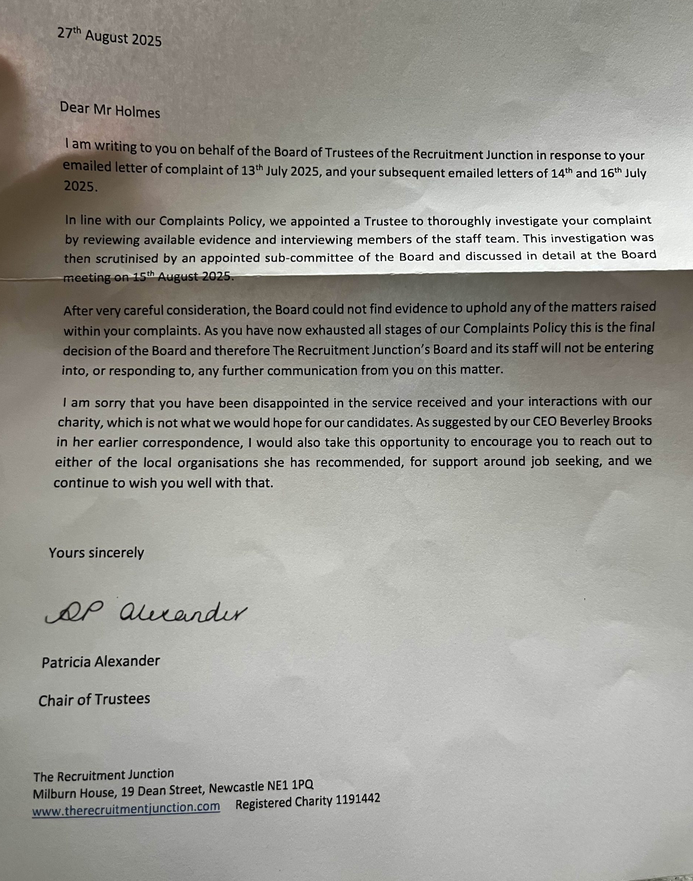
I engaged with TRJ earlier this year. After I sent polite written feedback to the CEO, my support was withdrawn and my contact was blocked. No independent complaints route was offered. No safeguarding check was opened. The decision created risk instead of reducing it.
- Communication blocks across multiple addresses after I sought a lawful, written path to resolution.
- Data rights friction after a Right to Erasure on 7 July and a Subject Access Request on 11 July. The responses muddled dates and claims of deletion and did not lawfully fulfil the SAR.
- Reputational swipe by a trustee on a public profile, later removed after documentation.
Values in public, practice in private
TRJ messages publicly about compassion, second chances, and faith. That language sets a bar. For a disabled service user asking for calm, written process, the reality was different. Blocking contact is not a de escalation method. It is fuel on a fire.
Why this matters
Safeguarding is not optional
Withdrawal of support after feedback is a risk event. A competent service treats it that way. The correct response is a written route to independent review, a pause for de escalation, and practical adjustments that keep people safe.
Equality duties apply in practice
Autistic service users often need predictable, written communication and time to process decisions. Those adjustments cost little and prevent harm. Email blocks create the opposite outcome.
Data rights are part of safety
A Subject Access Request is how a person verifies what has been recorded about them, who saw it, and why decisions were taken. Confused timelines or premature deletion claims undermine trust and breach the law.
Public money requires public accountability
Monitoring returns, safeguarding logs, and due diligence exist for moments like this. Funders should want to see them now. Beneficiaries deserve to know those systems work when it counts.
Pattern, not one off
- Feedback lands, support ends.
- Communication is blocked.
- A harassment frame appears without substance.
- Data rights are mishandled.
- Public messaging leans on values while governance plays defence.

Four questions funders should answer
- Terms and standards – What did your agreement require on safeguarding, equality, and complaints handling.
- Monitoring reality check – What did TRJ report, and does that match what actually happened when concerns were raised.
- Serious incidents – Did you receive incident or complaint reports of this nature. If not, why not.
- Due diligence and learning – What checks did you do at award stage and after concerns were raised. What changes will you make now.
What good looks like tomorrow morning
- Answer in writing, on time. Name an independent reviewer. Keep dates you set.
- Offer adjustments without a fight. Switch to written, predictable updates. Allow processing time.
- Keep the record clean. Log decisions, correct mistakes, fulfil SARs properly.
- Tell funders the truth. Monitoring that hides awkward facts is spin, not governance.
What happens next
Requests have gone to major funders for grant agreements, monitoring returns, safeguarding records, and due diligence notes. A statutory FOI is in with the National Lottery. Substantive responses will be published in full. Silence will be published with dates.



Be First to Comment