Estimated read time: 4 minutes
PGP Encryption: By the Numbers
- Key Strength: Most PGP keys are 2048 or 4096 bits. For context, your bank card PIN has just four digits and ten thousand combinations. A 2048-bit key has more possible combinations than there are atoms in the universe.
- Time to Crack: Even if every computer on Earth tried to brute-force a strong PGP key, it would take longer than the age of the universe. Realistically, you would be waiting trillions of years for a result.
- Real-World Results: There are no known cases of anyone brute-forcing a modern PGP key. Nearly all PGP failures happen when someone loses or leaks their private key, not because the maths is broken.
What Is PGP? The Basics
PGP stands for “Pretty Good Privacy.” Despite the modest name, it is one of the most powerful privacy tools ever created. PGP uses advanced maths to scramble your messages into unreadable code that only the right person can unlock. Even if someone intercepts your email or file, they will see nothing but gibberish unless they have the right secret key.
A Simple Analogy
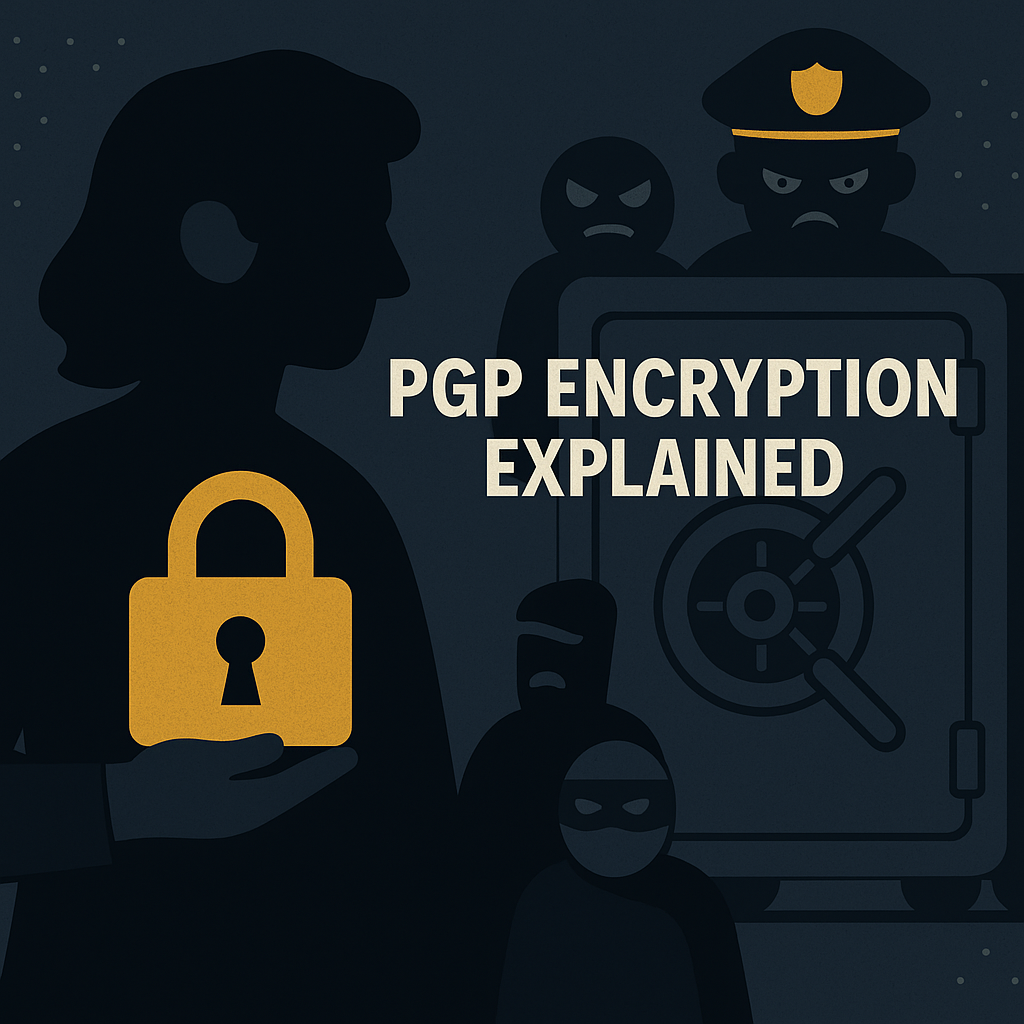
Imagine you want to send someone a letter in a locked safe. You give everyone your padlock (public key), but only you keep the key (private key) that opens it. Anyone can lock a message for you, but only you can open it. This is how PGP protects your privacy.
What Is PGP Actually Used For?
PGP has a reputation. If you have watched a documentary about the dark net, you have probably seen PGP mentioned alongside drug dealing, hacking, and whistleblowing. For years, PGP has been the gold standard for people buying weed and other substances online, especially through encrypted darknet markets. It is the tool for anyone who really does not want to be caught, for good or bad reasons.
But PGP is not just for the underground. Journalists use it to protect their sources. Human rights activists depend on it to stay safe in hostile countries. Lawyers, doctors, and researchers trust it to keep sensitive data confidential. Even everyday people use it when they are fed up with Big Tech or governments scanning their private messages.
If you value privacy, PGP is for you. Whether you are blowing the whistle, reporting wrongdoing, or just want your emails to stay between you and the recipient, PGP is the tool of choice.
How Does PGP Work and Why Can’t It Be Cracked?
PGP is built on public key cryptography. Here is how it works:
- Public Key: Like a padlock you can give to anyone. Anyone can use it to lock a message for you.
- Private Key: The key you keep safe and never share. Only your private key can unlock messages encrypted with your public key.
The strength of PGP comes from the size of the key and the maths behind it. With a 2048-bit key, the number of possible combinations is unimaginably huge. Even a supercomputer would need longer than the lifetime of the universe to try every possible combination. There are no backdoors and no tricks. The only real risks are human errors, like losing your private key or using a weak password.
Real World Applications (and Why PGP Could Soon Be Everywhere)
- Whistleblowing: Safest way for insiders to report abuse, corruption, or malpractice.
- Private Email: Used by lawyers, doctors, and researchers who send confidential information.
- Journalism: Protects sources and unpublished stories from leaks or exposure.
- Personal Security: Activists, professionals, and ordinary people use PGP to keep their private life private.
Why PGP Could Become Mainstream
The world is changing. The UK’s Online Safety Act and similar laws around the globe are giving governments more power to demand access to private messages. Apps like WhatsApp, Signal, and Telegram are under pressure to weaken encryption. Every time a privacy scandal hits the news, more people start looking for stronger ways to protect themselves.
The good news is that using PGP is no longer a headache. Five years ago, you had to copy-paste weird text and juggle files. Today, PGP can be automated behind the scenes. Apps and browser plugins can encrypt and decrypt your messages for you, so you do not need to be a tech expert. If you use our whistleblower tool, for example, all the hard work is handled automatically.
End-to-end encryption is becoming the norm. As governments push for more surveillance and “backdoors,” real privacy tools like PGP are going to be in demand. It is easy to imagine a future where PGP is as common as using a fingerprint or face scan to unlock your phone.
Is PGP Difficult to Use?
PGP used to look intimidating, but now it is much easier. Many modern email services and apps offer simple ways to use PGP without technical skills. If you can copy and paste, you can use PGP. If you ever get stuck, your IT department or any online guide can help.
How Could PGP Go Wrong?
- If you lose your private key, you lose access to your messages forever.
- If your password is weak or you share your key by mistake, someone could access your messages.
- The maths is strong. Human error is almost always the weakest link.
The Bottom Line
PGP is one of the strongest privacy tools ever invented. It keeps whistleblowers, journalists, and regular people safe from snooping. With the world changing fast, you can expect to hear a lot more about PGP in the next five to ten years. It is not just for “hackers” or “paranoid” people. Soon, it could be as normal as using a password manager or locking your front door.
Learn the basics, keep your key safe, and protect your private life. Privacy is not just a right. It is common sense.
Written by Kieron JH | The Reasonable Adjustment



Be First to Comment