When “Tough on Crime” Becomes Illogical
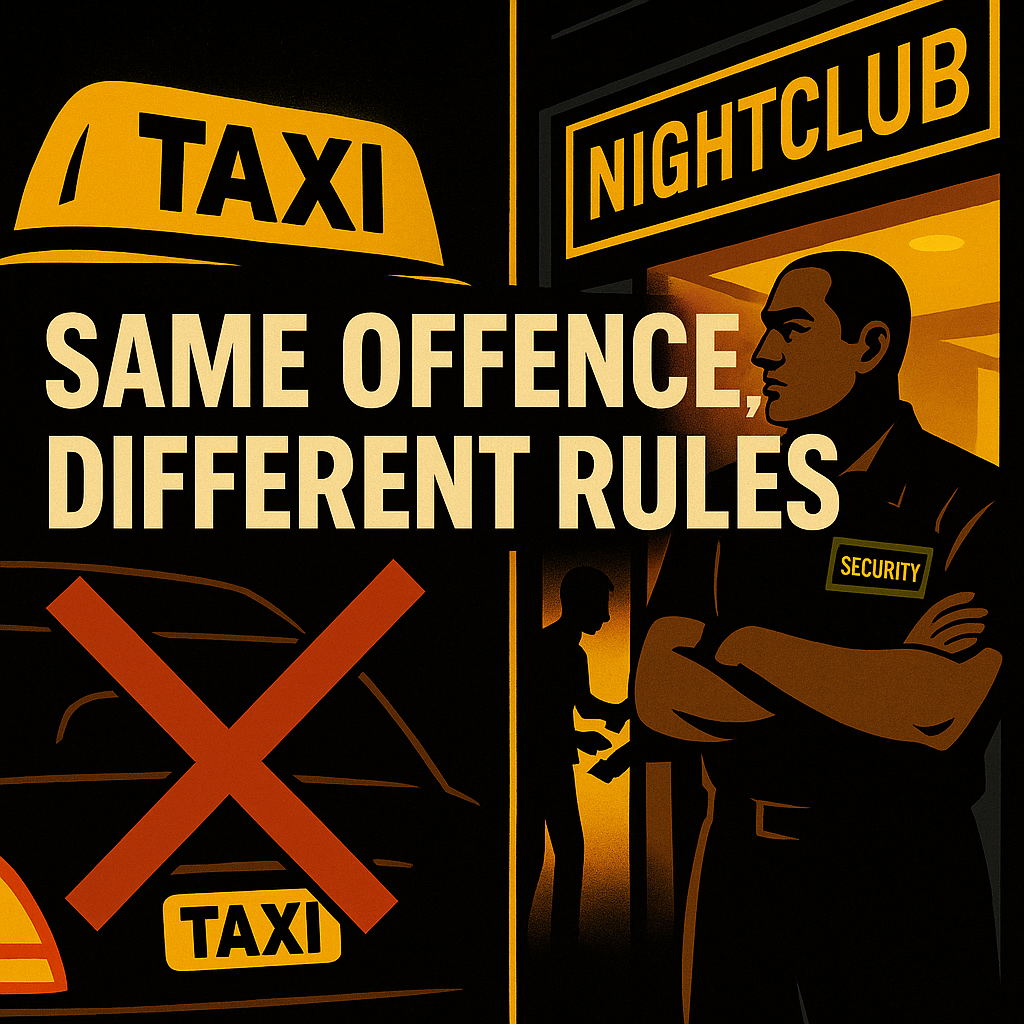
Here is the blunt truth. Our licensing and vetting rules are a patchwork that looks tough in speeches, and confused in practice. A person with a drug supply conviction can sometimes return to door supervision in a few years, yet face a decade on the bench for a taxi licence. Same city, same night, very different logic.
None of this argues for a free pass. It argues for coherence, risk based assessment, and rehabilitation that counts for something.
The core mismatch
Taxis and private hire often follow guidance that sets a hard ten year stand down for supply or possession with intent. SIA security uses a case by case model that weighs seriousness, recency, and disposal. Result, a nightclub door can open sooner than a steering wheel with CCTV and GPS. If the goal is public safety, that outcome needs defending with more than optics.
Other sectors that feel the sting
Drug supply histories raise flags across many regulated roles. Some regimes are strict for clear security reasons, others are strict because it looks strict. Here is the landscape in plain English.
| Sector or role | How it tends to work | What feels illogical |
|---|---|---|
| Night time economy, SIA licences | Case by case, time elapsed and sentence type matter. Rehabilitation evidence can tip decisions. | Opens earlier than taxis despite obvious crossover with drug markets at venues. |
| Taxis and private hire | Many councils apply a flat ten year stand down for supply or PWITS. Discretion exists but is rarely used. | Longer than some violent offences. Blanket clocks ignore individual progress and supervision options. |
| Aviation security and airside | Hard security model. Disqualifying convictions fail background checks while unspent. Appeals exist in narrow forms. | Coherent on security grounds, yet thresholds differ from civilian transport where risks can be managed with cameras and audits. |
| Policing, prisons, probation | Vetting is extremely conservative. Supply histories are usually a no for frontline roles. | Understood on corruption risk, but there is little space for structured rehabilitation routes into non sensitive posts. |
| Teaching and education | Case by case fitness to teach. Serious supply often leads to prohibition unless rehabilitation is exceptional. | Panels can weigh context, yet outcomes vary widely by presentation and representation quality. |
| Healthcare regulators | Panels view supply as serious impairment of fitness. Striking off is common unless rehabilitation is strong and verified. | Fraud can draw shorter sanctions than supply, even when patient harm risk may be similar or higher. |
| Law, finance, and fiduciary roles | Fit and proper tests look at integrity and recency, not automatic offence lists in most cases. | Principled on paper, harsh in practice because employers default to zero risk and never explain refusal. |
| Care and regulated activity with DBS | Barred lists are absolute for listed activity. Supply is not an automatic bar by itself, yet can lead to barring where risk is evidenced. | Large grey zone where people are not barred by law, yet never hired due to fear and speculation. |
| Charity trusteeship | Automatic disqualification focuses on terrorism, money laundering, and sexual offences. | You can be eligible for a trustee board sooner than a taxi badge. That should make policymakers pause. |
Note, policies vary by regulator and change over time. Always check the current rulebook for your sector.
Why the current approach fails the common sense test
- One label, many realities. Drug supply ranges from low level Class B to organised Class A near schools. Flat bans treat unlike cases alike.
- Role risk mismatch. If the risk is drug exposure, clubs are higher risk than school runs. Yet clubs may open first and taxis wait a decade.
- Security logic vs moral posturing. Aviation and policing use corruption resistance. Taxis read more like moral hygiene than targeted risk management.
- No credit for rehabilitation. Blanket clocks undervalue clean testing, supervision compliance, references, and sustained work history.
A better, cleaner framework
1) Split drug supply into harm tiers
Create offence sub tiers that reflect real harm. For example, supply to children, organised Class A, commercial adult supply, historic Class B with strong rehabilitation. Align stand downs and conditions to the tier, not the headline label.
2) Map risk to the actual job
Write role specific matrices. Nightclub doors face one set of pressures, lone passenger transport faces another, airside cargo faces a third. Calibrate checks, probationary periods, and conditions accordingly.
3) Make rehabilitation count more than clocks
Allow shorter stand downs where applicants provide verified abstinence, training, references from regulated professionals, and clean conduct on supervised placements. Give licensing panels a structured way to say yes with conditions.
4) Use conditional and staged licences
Target the risk instead of excluding the person. Examples include mandatory cameras, random testing where lawful, enhanced operator audits, and tighter incident reporting during an initial term.
5) Publish outcomes and reasons
Aggregate statistics and plain English reasons rebuild trust, reduce bias, and show where guidance is producing odd results. Sunshine is quality control.
Practical playbook for applicants
- Pick sectors that already use genuine risk assessment, then build a portfolio of rehabilitation evidence that answers their exact concerns.
- If you challenge a taxi refusal, argue proportionality, role risk, and your verified progress, not only fairness in the abstract.
- Keep records tidy. Clean tests, training certificates, supervisor letters, and community work land well in hearings.
- If a route is a hard no, pivot to adjacent roles where risk can be managed by conditions rather than a calendar.
This article is information, not legal advice. Rules change, and regulators keep discretion. Check the current guidance for your sector and consider getting advice before you apply or appeal.



Be First to Comment